
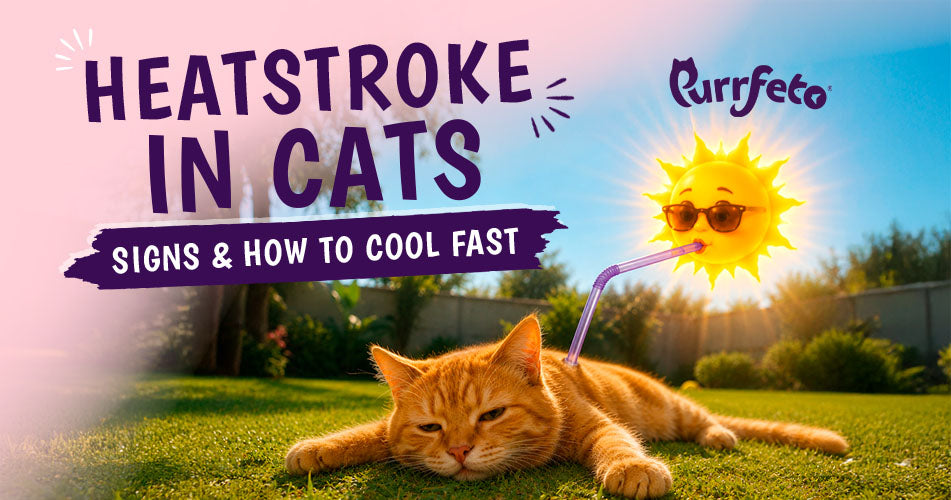
Summer heat can be uncomfortable for everyone, including your feline companion. While cats are known for finding dark corners and lounging in cool spots, extreme temperatures can still put them at risk of serious health problems. One condition every cat parent should know about is heatstroke in cats- a dangerous emergency that needs immediate medical attention. With proper hydration, cooling measures, and balanced nutrition from Purrfeto, your cat can stay healthy, comfortable, and well-supported throughout the summer heat.
Understanding the warning signs early can help protect your pet and even save their life.
What is Heatstroke in Cats?
Heatstroke in cats happens when their body temperature rises to dangerously high levels, usually above 104°F–105°F. At this stage, the body can no longer regulate heat properly, making it a medical emergency.
There is also a difference between heat exhaustion in cats and full heatstroke. Heat exhaustion is often the earlier stage, where the cat is overheating but may still recover quickly if cooled down in time. If ignored, it can rapidly progress into severe heatstroke.
Heat Exhaustion in Cats: Early Warning Signs
Recognizing heat exhaustion in cats early is extremely important. During this stage, their body temperature may rise to around 103–104°F.
Some common early symptoms include:
-
Constantly searching for cool surfaces
-
Panting
-
Excessive drooling
-
Increased grooming
-
Restlessness or discomfort
-
Collapse
-
Seizures
-
Severe disorientation
-
Inability to stand or walk
These signs may seem mild at first, but they should never be ignored. Immediate cooling measures can prevent the condition from becoming life-threatening. In extreme cases, heatstroke can lead to organ failure, brain damage, or even death in cats. This is why quick veterinary treatment is critical.
Cat Overheating Symptoms You Should Never Ignore
Cats are generally good at hiding discomfort, which is why noticing cat overheating symptoms quickly matters. Watch out for:
-
Heavy panting or difficulty breathing
-
Drooling
-
Weakness or unusual tiredness
-
Red gums or tongue
-
Loss of balance or stumbling
-
Vomiting or diarrhea
-
Confused behavior or glazed eyes
If your cat displays several of these symptoms together, act immediately.
Causes of Heatstroke in Cats
Several situations can lead to heatstroke in cats, especially during hot and humid weather.
Common causes may include:
-
Exposure to high temperatures & humidity
-
Poor indoor ventilation
-
Being trapped inside cars
-
Closed laundry rooms or dryers
-
Lack of fresh water
-
Hot, enclosed spaces without airflow
Unlike humans, cats cannot sweat effectively. They mainly cool themselves through grooming and by resting in shaded or ventilated areas.
Emergency Steps on How to Cool Down a Cat Quickly
Knowing how to cool down a cat safely can make a huge difference during an emergency situation.
Follow these steps immediately:
-
Move your cat to a cool, shaded, or air-conditioned area.
-
Use a cool damp towel on the body. Avoid ice-cold water.
-
Focus on cooling the paws, ears, and belly.
-
Offer fresh drinking water.
-
Use a fan or air conditioning to help lower body temperature gradually.
-
Contact a veterinarian immediately.
Along with hydration, moisture-rich meals like wet cat food may also help support fluid intake during hot weather. Recipes such as Tuna Platter in Jelly provide high-quality protein, up to 87% moisture for hydration support, and Omega 3 & 6 fatty acids that help maintain healthy skin and coat health. Even if your cat seems better after cooling down, veterinary care is still essential because internal complications can develop later.
When to See a Vet
Heatstroke is always a medical emergency. Delaying treatment can lead to:
-
Organ failure
-
Severe dehydration
-
Brain damage
-
Death
If you suspect overheating in your cat, do not wait for symptoms to worsen. Immediate professional care gives your cat the best chance of recovery.
How to Prevent Heatstroke in Cats
-
Keep cats indoors during peak heat hours
-
Ensure constant access to fresh water
-
Provide cool resting areas and proper ventilation
-
Never leave cats in parked cars or enclosed rooms
-
Monitor kittens, senior cats, and overweight cats carefully
Nutritious meals and proper hydration also help cats stay healthier during warmer months. Balanced meals with both wet and dry food can support energy, digestion, and overall well-being. Options like Chicken & Rice Kitten Dry Cat Food provide high-quality chicken protein to support muscle growth, rice for easy digestion, essential vitamins and minerals for immunity, and complete daily nutrition. Proper hydration and balanced nutrition may also help support urinary health and reduce the risk of urinary tract (UTI) concerns in cats by up to 40%.
Final Thoughts
Heatstroke in cats is serious, but it is also highly preventable. Paying attention to early warning signs can help stop the condition before it becomes dangerous.
Quick cooling, hydration, and immediate veterinary care are the most important steps if your cat overheats. A little extra care during hot weather can keep your feline friend safe, comfortable, and healthy all summer long.
FAQs
1. What are the first signs of heat exhaustion in cats?
Early signs of heat exhaustion in cats may include panting, drooling, excessive grooming, restlessness, and seeking cool surfaces to lie on.
2. What are the most common cat overheating symptoms?
Some common cat overheating symptoms include difficulty breathing, lethargy, vomiting, red gums, drooling, and confusion. In severe cases, cats may collapse or have seizures.
3. How do you cool down a cat safely?
If you are wondering how to cool down a cat, move them to a cool and ventilated area immediately. Use a cool, damp towel on their paws, ears, and belly, offer fresh water, and use a fan or air conditioning if possible. Always contact a veterinarian right away.
4. What causes heatstroke in cats?
Heatstroke in cats usually happens due to high temperatures, humidity, lack of ventilation, dehydration, or being trapped in enclosed spaces like cars or small rooms.
5. What are severe heat stroke symptoms in cats?
Serious heat stroke symptoms in cats include body temperature above 104°F, collapse, seizures, inability to walk, severe weakness, and disorientation. Heatstroke is a medical emergency and requires immediate veterinary treatment.
 Back to Blogs


