
Your cat stares at you from across the room, blinks slowly, then walks away without a sound. A few minutes later, she's kneading a cushion like she's making bread, purring loudly enough to hear from the kitchen. Happy? Annoyed? Plotting something? If you've ever felt like your cat is speaking a language you almost understand, you're not imagining it.
Cats are constantly communicating through their tails, ears, eyes, and daily habits. Most of us were just never taught how to listen. This guide breaks down what behavior science actually says about the feline mind and what it means for cat parents, as a growing number of households are raising rescued street cats alongside pedigree breeds, often for the first time.
What is Cat Psychology, Really?
Cat psychology is simply the study of why cats think, feel, and act the way they do. It sounds academic, but it comes down to one idea: cats did not evolve the way dogs did, and that changes almost everything about how they relate to us.
Dogs descend from pack animals with clear social hierarchies, which is part of why they read human cues so easily and thrive on group structure. Cats descend from the African wildcat, a solitary hunter that didn't need a pack to survive. For most of their evolutionary history, cats hunted alone, defended their own territory alone, and answered to no one.
That solitary history doesn't mean cats are antisocial. It means their social behavior is more flexible and more voluntary than a dog's. A cat chooses to bond with you rather than being wired to automatically defer to you, which is exactly why earning a cat's trust feels different, and often more rewarding, than earning a dog's.
Why Cats Behave the Way They Do: The Predator-Prey Paradox
Here's the piece of understanding cat behavior that explains almost everything else: cats are both predator and prey at the same time.
In the wild, a cat hunts small animals but is also small enough to be hunted by larger predators. Domestication changed their lifestyle, but it didn't rewrite millions of years of instinct. This dual identity shows up in your living room every day:
Territory matters just as much as safety. Cats mark their space through scent, by rubbing their cheeks on furniture and people, and through scratching, which is as much about communication as it is about claw maintenance. This is also why cats can seem unsettled after you rearrange furniture, bring home a new pet, or move house: their mental map of "safe territory" has just been redrawn without their input.
Cat Body Language: Reading Your Cat's Secret Language
Cats have far fewer facial muscles than dogs or humans, so most of their communication happens through posture rather than expression. The golden rule, repeated by every veterinary behaviorist, is that no single signal means anything on its own. Context and the whole body together tell the real story.
Tail
- Held straight up, sometimes with a slight curl at the tip: confident and open to interaction
- Puffed up: feeling threatened and trying to look bigger
- Tucked low or wrapped around the body: anxious or trying to appear smaller
- Twitching or thumping: irritation, or intense focus during hunting play
Ears
- Forward and relaxed: curious or content
- Flattened sideways like airplane wings: uncomfortable or mildly stressed
- Fully pinned back: frightened or ready to defend itself
Eyes
- Slow blink directed at you: this is often called a "cat kiss," a genuine sign of trust and calm
- Dilated pupils: can mean excitement, fear, or arousal from play, so read this alongside the rest of the body
- Direct, unbroken staring: cats generally read this as a threat rather than affection, which is why forcing eye contact with a nervous cat can backfire
Whiskers and body
- Forward and loose whiskers, relaxed posture: comfortable
- Whiskers pulled back flat, body low to the ground: stressed or fearful
Purring: Most people assume purring always means happiness, but cats also purr to self-soothe when they're in pain, giving birth, or feeling unwell. A purring cat that's also hiding, limping, or off its food should still see a vet.
Kneading: The rhythmic paw-pressing many cats do on blankets or laps is a leftover kitten behavior from nursing. It's one of the clearest signs of comfort and contentment in an adult cat.
Common Cat Behaviors
These are some of the questions Indian cat parents search for most, and the honest, straightforward answers.
Why does my cat knock things off tables?
Partly curiosity, partly instinct. Batting an object and watching how it falls mimics testing prey, and cats also learn quickly that a falling glass gets your attention fast. Redirecting that energy into scheduled play sessions usually reduces the habit.
Why does my cat bring me dead lizards or mice?
This is one of the most common questions from cat parents where geckos and mice are frequent household visitors. Mother cats bring prey back to teach kittens how to hunt, and many adult cats extend that same instinct to their human family, treating you as part of their social group who needs "teaching" or a share of the catch. It isn't a gift gone wrong; in a cat's mind, it's generosity.
Why does my cat have "zoomies" at 2 a.m.?
Cats are naturally crepuscular, meaning they're most active at dawn and dusk. Indoor cats, especially ones that sleep for large stretches of the day, often store up energy that comes out as sudden sprints. A vigorous play session before bedtime can shift this pattern.
Why does my cat show its belly, then bite if I touch it?
An exposed belly usually signals trust and relaxation, not necessarily an invitation to touch. A cat's belly is also its most vulnerable area, so the instinct to protect it can override the moment of relaxation the second a hand gets close.
Why is my cat avoiding the litter box?
This is worth taking seriously rather than waiting it out. Common causes include a dirty box, a stressful change in the home, or a new pet, but it can also point to a urinary tract issue, which cats are particularly prone to. A sudden change in litter box habits is one of the few behavior shifts that's worth a same-week vet visit rather than a wait-and-watch approach.
The Cat Parent's Experience: Street Cats, Desi Cats, and Trust
Cat ownership looks different from the picture in most Western pet-care content, and that context matters for understanding cat behavior here.
India is home to an estimated stray cat population in the millions, and a pilot survey of pet owners in Mumbai, published in the journal Frontiers in Veterinary Science, found that nearly a quarter of respondents had owned a cat at some point, with many of those cats originally adopted off the street. Industry estimates also suggest India's overall pet population roughly doubled between 2017 and 2022, with younger, urban households driving much of that growth.
Cats have also carried an unfair reputation in parts of Indian culture, sometimes dismissed as unlucky, cold, or "not as loyal as dogs." The attachment research above tells a different story: most cats do bond deeply with their people; they just show it on their own terms.
This is especially true for a rescued street cat. A kitten that spent its first weeks or months fending for itself, without a consistent, safe caregiver, is more likely to lean toward the insecure-avoidant end of the attachment spectrum, at least at first. That's not a flaw in the cat. It's a completely reasonable response to an early life with far less predictability than a kitten raised indoors from birth.
A few things genuinely help a formerly street cat settle in:
- Let the cat set the pace: Approach less than you think you should. Let your cat come to you rather than reaching for it.
- Skip the staring: Direct eye contact reads as confrontational to a nervous cat. A slow blink from across the room does more to build trust than a close approach.
- Build a predictable routine: Consistent feeding times, litter box location, and quiet hours give a formerly street cat the one thing it likely never had: a schedule it can rely on.
- Give it time before judging the bond: A rescued cat may never be a lap cat, but many become deeply attached in quieter ways, like sitting nearby rather than on you, or following you room to room.
How Nutrition and Routine Shape Cat Behavior
Feeding isn't just about calories; it's one of the biggest daily opportunities to reduce stress-driven behavior in a cat.
Cats are naturally neophobic about food, meaning sudden changes in diet can genuinely unsettle them, sometimes showing up as pickiness, vomiting, or even skipped meals. This is why vets and pet food brands alike recommend introducing a new food gradually, mixing it in with the old food over about a week rather than switching overnight. Purrfeto's own vet-formulated recipes follow this same guidance for exactly that reason.
A predictable feeding schedule also does quiet psychological work. Cats that know when their next meal is coming tend to show less anxious meowing, less resource guarding around food bowls, and calmer behavior overall, since so much feline stress comes down to uncertainty about their environment.
Diet quality plays a supporting role too. Many premium recipes, including Purrfeto's range of wet and dry food for kittens and adults, are built around ingredients like taurine for heart and eye health, omega fatty acids for a healthy coat, psyllium husk to ease digestion and reduce hairballs, and balanced minerals to support healthy urinary pH. None of this replaces a vet visit if your cat's behavior changes suddenly, but a well-fed, digestively comfortable cat is generally a calmer, more predictable one, since physical discomfort has a way of showing up as behavior first. If you're settling a newly adopted street cat into a routine, Purrfeto's vet-formulated cat and kitten recipes are worth a look as one predictable, India-made option to build that routine around.
Signs Your Cat May Need Extra Support
Most behavior is normal cat behavior, but a few changes are worth flagging to a vet rather than working through alone:
- Sudden hiding or withdrawal that doesn't match a clear trigger like a loud festival or a new visitor
- A noticeable drop in appetite, grooming, or play interest lasting more than a day or two
- Increased aggression or vocalization that's out of character
- Litter box avoidance, especially if it starts suddenly
- Repetitive behaviors like overgrooming to the point of bald patches
Cats hide illness by instinct, so behavior changes are often the earliest, and sometimes only, warning sign that something physical is going on.
Building a Cat-Friendly Home
A few small changes make a real difference once you understand what's actually driving your cat's behavior:
- Add vertical space: A cat tree, wall shelf, or even a cleared-off cupboard top gives your cat the elevated, secure vantage point its instincts crave.
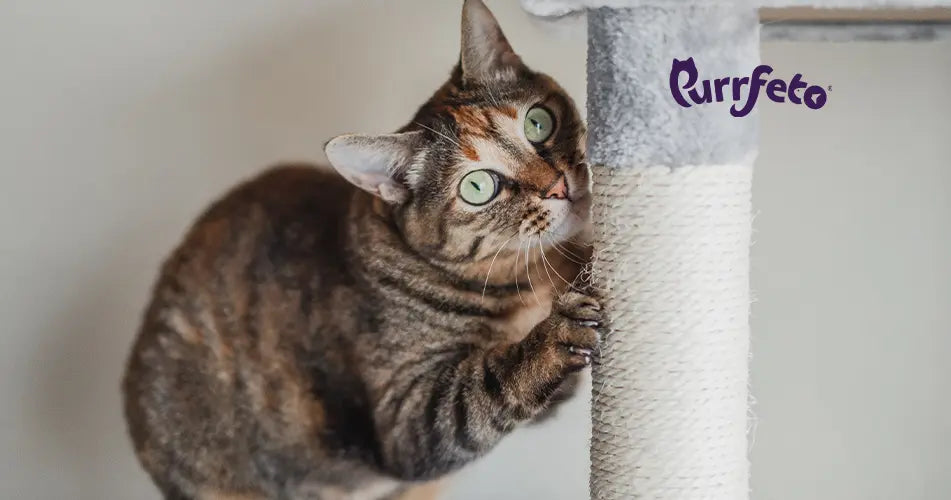
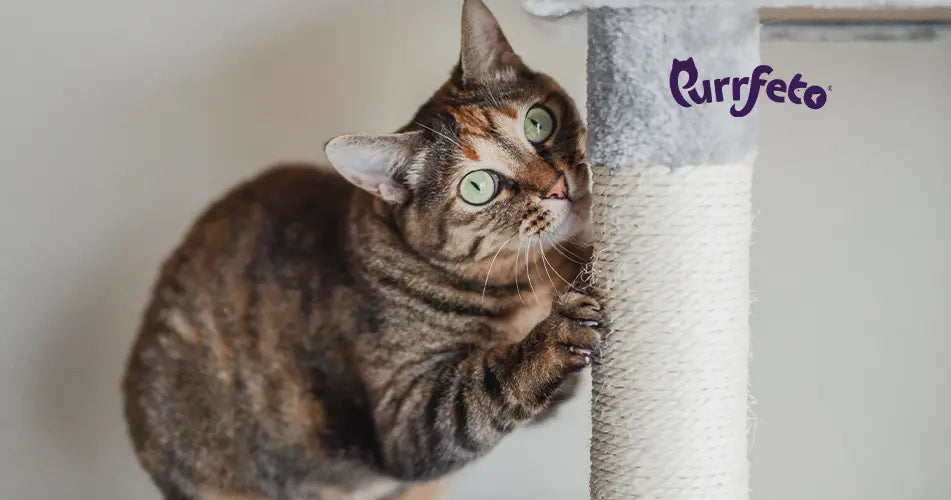
- Offer scratching outlets: A sturdy post or mat protects your furniture and satisfies a genuine territorial and stretching need.
- Keep a hideout available: A covered bed or even an empty box gives an anxious cat somewhere to fully decompress.
- Schedule real play: Ten to fifteen minutes of wand or toy play once or twice a day burns off predatory energy that would otherwise turn into 2 a.m. zoomies or ankle-pouncing.
- Respect the slow blink: It costs nothing, and it's one of the clearest ways to tell your cat, in a language it actually understands, that you're not a threat.
The Takeaway
Understanding cat behavior isn't about decoding a single tail flick or one dramatic dash across the room. It's about watching the whole animal, in context, over time, and accepting that independence and attachment aren't opposites for a cat; they coexist. Whether you're raising a pedigree kitten or a cat that found its way to you off the street, the science says the same thing: most cats do bond with their people, on a timeline and in a language that's entirely their own. Patience, a predictable routine, and a bit of fluency in cat body language will get you further than anything else.
 Back to Blogs


