
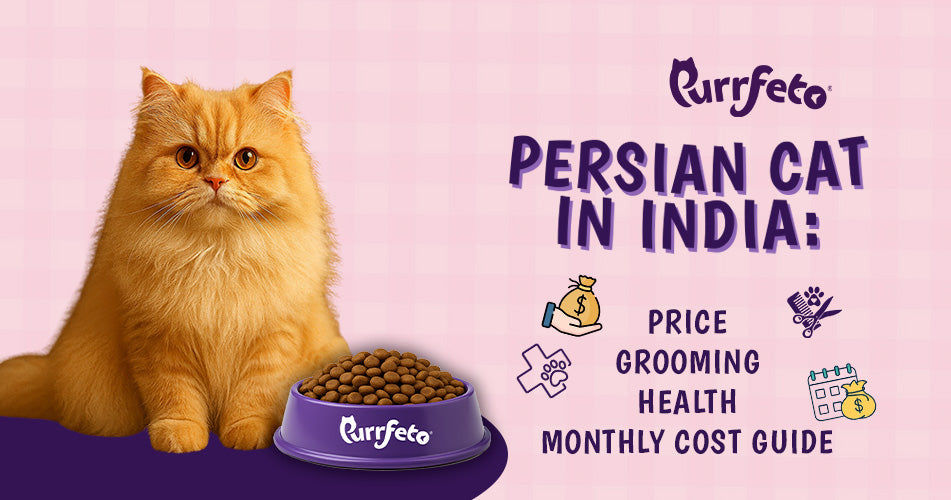
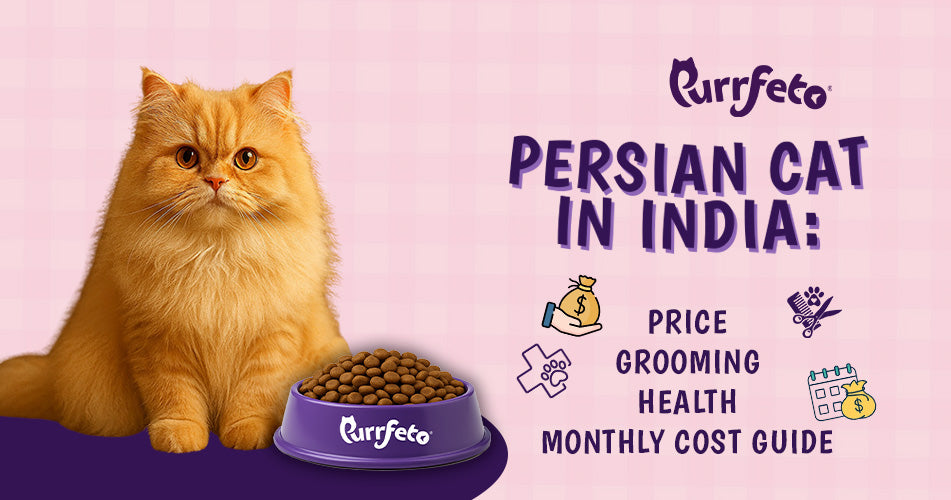
Persian cats are one of the most admired and luxurious cat breeds, famous for their long, silky coats, expressive eyes, and calm, affectionate nature. For families who value quiet, loyal, and beautiful companions, Persian cats make the perfect indoor pet. Their charming personality has even earned them appearances in Bollywood films and Hollywood productions, making them recognizable to movie lovers around the world.
While they may look like they glide gracefully across a room, Persian cats require dedicated grooming, nutrition, and health care to thrive. Their diet, coat maintenance, and overall well-being can be effectively supported with high-quality foods like Purrfeto Cat Food, which provide essential nutrients including taurine and omega fatty acids. This guide covers Persian cat prices in India, monthly expenses, grooming routines, health insights, and kitten care, helping both current and prospective cat parents provide the best life for their feline companions.
Persian Cat Overview

Originating from Persia (modern-day Iran), Persian cats are instantly recognizable due to their long, flowing coat, round expressive eyes, and flat face. Calm, gentle, and affectionate, these cats prefer indoor living with stable, peaceful environments. They are excellent companions for families and individuals alike.
Persian kittens are equally captivating, with fluffy fur and playful personalities that quickly endear them to pet parents. Early socialization and grooming help them adapt to their long-haired coats and prevent matting.
Fun fact: Persian cats have starred in iconic Hollywood films such as Stuart Little (Snowbell), Cats & Dogs (Mr. Tinkles), and James Bond films (Blofeld's white Persian), as well as being spotted with Bollywood stars like Alia Bhatt, who also owns Persian cats, highlighting their popularity across cultures.
Persian Cat Price

The Persian cat price varies widely depending on quality, coat type, breeder reputation, and pedigree.
-
Pet Quality (Kittens): ₹15,000 – ₹30,000
-
Breeder/Show Quality (Kittens): ₹50,000+
-
Persian Kitten Price: ₹10,000 – ₹30,000
Note: Please note that the prices listed are approximate and can fluctuate based on seasonal demand, market trends, breeder reputation, and regional factors.
Factors affecting the cost of a Persian cat include coat color (White, Golden, Chinchilla Silver, Calico, and Himalayan colorpoints), breeder experience and location, and vaccinations. Adoption from verified shelters is also a viable option and can be more affordable.
Persian cat owners should carefully consider these factors before bringing a kitten or adult cat home, ensuring both health and happiness for the pet.
Monthly Maintenance & Expenses
Owning a Persian cat involves planning for regular monthly expenses to maintain health, comfort, and grooming:
-
Food: ₹2,000 – ₹3,000 (high-quality, protein-rich cat food recommended).
-
Grooming & Bathing: ₹300 – ₹1,000 (professional services optional).
- Vet Care & Preventive Health (Averaged): ₹500 – ₹1,500 per month (covers annual vaccinations, routine checkups, and deworming spread across the year).
-
Litter & Accessories: ₹500 – ₹1,000 per month.
The overall monthly maintenance cost of a Persian cat ranges between ₹4,000 and ₹8,000, depending on lifestyle, diet, and grooming needs. Ensuring a balanced diet with essential nutrients, including taurine and omega fatty acids, helps Persian cats maintain heart health, eye health, and a shiny coat.
Grooming & Care

The Persian cat grooming routine is crucial due to their dense, long coats and flat faces:
-
Brushing: Daily brushing prevents mats and tangles while distributing natural oils for a shiny coat.
- Bathing: Every 2 to 4 weeks using a mild, cat-safe shampoo and thorough drying. This keeps their dense undercoat clean, reduces shedding, and prevents painful grease mats.
-
Eye Cleaning: Flat-faced Persians are prone to tear staining; gentle daily cleaning prevents infections.
-
Diet: High-protein diets with omega fatty acids support coat shine, skin health, and reduce hairballs.
- Environment & Climate Control: Strictly indoor living in temperature-controlled (air-conditioned or well-ventilated) environments. Persian cats overheat easily during hot Indian summers due to their thick coats and short nasal passages.
For optimal care, foods like Purrfeto Adult Wet Cat Food with Mackerel in Gravy – 80g provide high moisture for hydration, taurine for heart and eye health, and omega-rich fish proteins to maintain a silky coat. Meanwhile, Purrfeto Adult Dry Cat Food with Chicken & Sardine – 1.2kg offers a crunchy texture to support dental health, balanced taurine for cardiovascular support, and fibres for digestion.
Kitten care is equally important. Persian kittens require early grooming practice and soft, nutrient-rich foods to support healthy growth. Feeding a combination of wet and dry Purrfeto products ensures kittens develop strong muscles, healthy vision, and a glossy coat.
Health & Behavior

Persians are calm, loving, and low-energy, preferring quiet homes. They may not enjoy rough handling or loud noises, making them ideal for families seeking affectionate indoor companions.
Common Health Concerns:
- Polycystic Kidney Disease (PKD): A common genetic condition causing kidney cysts; requires genetic screening by breeders.
- Brachycephalic Airway Syndrome: Breathing difficulty and sensitivity to heat/humidity due to a flat facial structure.
- Eye Overflow & Tear Staining: Overflowing tear ducts require daily cleaning to prevent fungal or bacterial skin infections.
- Dental & Jaw Malocclusion: Flat jaws can lead to misaligned teeth, requiring regular dental health care.
- Hairballs & Skin Sensitivities: High hair ingestion during self-grooming requires hairball control diets and daily combing.
High-quality nutrition, like Purrfeto wet and dry cat food, supports heart, vision, digestion, and skin health, reducing hairball formation and enhancing coat shine. Regular vet visits, grooming, and taurine-rich foods are essential to prevent long-term complications.
For more details about nutrition, see our guide on Wet vs Dry Cat Food: Which Is Best for Your Cat?, which explains the benefits of balanced diets for Persian cats.
Advantages of getting a Persian cat
- Calm & Gentle Temperament: Persians are soft-spoken, quiet, and relaxed, making them ideal companions for peaceful households.
- Affectionate Companionship: They form strong bonds with their owners and enjoy cuddles and lap time without being overly demanding or vocal.
- Ideal for Indoor Living: Due to their low-energy nature, they thrive in indoor environments and small spaces like apartments.
- Good with Families: Their easygoing personality makes them tolerant of gentle handling by children and other peaceful pets.
- Stunning Aesthetic: Famous for their long, luxurious coats and expressive eyes, they are widely considered one of the most visually beautiful cat breeds.
Fun Facts & Adoption Encouragement

Persian cats’ charm has made them celebrities in movies, cartoons, and social media. They are often featured as luxury companions, symbolizing calm elegance.
For families considering adoption, Persian cats offer low-activity indoor companionship, gentle play, and loyalty. Their kittens are playful, social, and trainable with early grooming and positive reinforcement. To explore more options and discover other beloved breeds, check out our guide on Thinking of Adopting a Cat? Meet the Most Popular Cat Breeds.
Conclusion
Persian cats are elegant, affectionate, and intelligent companions who require consistent grooming, nutrition, and healthcare. Their long coats, flat faces, and sensitive health demand attention, but the reward is a loving, loyal feline that enriches any home.
Whether you already own a Persian cat or plan to adopt one, prioritizing balanced nutrition, daily grooming, and ethical sourcing ensures a happy, healthy, and affectionate companion.
FAQs
1. How often should you groom a Persian cat?
Daily brushing is recommended to prevent mats and tangles. Baths can be given every 6–8 weeks (or every 2–3 months), and daily eye cleaning helps prevent tear staining and infections.
2. Are Persian cats good for families with children?
Yes! Persian cats are calm, affectionate, and low-energy, making them ideal indoor companions. However, they prefer gentle handling and a quiet environment.
3. What kind of diet is best for Persian cats?
A high-protein diet with omega fatty acids and taurine supports heart health, coat shine, and overall well-being. Combining wet and dry Purrfeto products ensures balanced nutrition.
Note: Because Persian cats are prone to urinary tract issues and kidney stress, wet food or active water fountains should be prioritized to ensure high hydration.
4. How should you care for Persian kittens?
Persian kittens need early grooming practice and nutrient-rich foods to support healthy growth, strong muscles, and a glossy coat.
5. Are Persian cats prone to any health issues?
Yes, they may experience brachycephalic breathing issues, tear staining, hairballs, and skin sensitivities. Regular vet visits, grooming, and quality nutrition help prevent complications.
6. How much does Persian cat hair cutting cost?
Professional hair cutting and full lion-cut grooming packages generally range from ₹1,000 to ₹3,000 per session, depending on the salon, location, and coat condition.
7. How much does Alia Bhatt’s cat cost?
Alia Bhatt’s famous white Persian cat, Edward, was adopted/gifted. A purebred white Persian cat of similar quality typically costs between ₹20,000 and ₹50,000+.
8. What is the price of a flat-faced Persian cat?
Flat-faced (Peke-faced) Persian cats usually cost between ₹20,000 and ₹45,000 for pet quality, and ₹50,000 to ₹1,000,000+ for high-pedigree or show quality.
9. Why are Persian cats so expensive?
They require selective breeding, specialized medical and flat-face care, extensive early grooming, and incur high coat-maintenance and health-screening costs for breeders.
 Back to Blogs


