
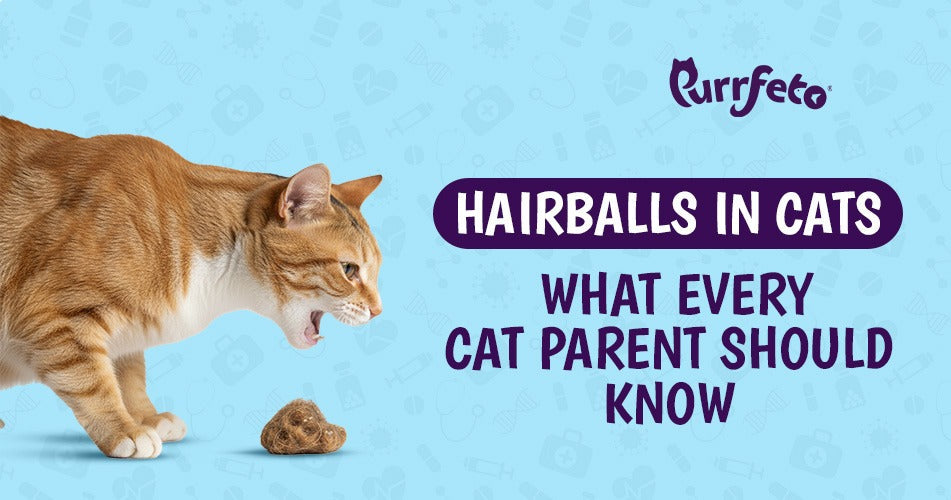
Many cat owners have experienced the unsettling sight of their pet coughing, gagging, or vomiting fur. While hairballs are a natural part of a cat’s grooming routine, frequent episodes can indicate underlying health or dietary issues. Understanding cat hairballs, what triggers them, and safe remedies can help maintain a cat’s digestive comfort and overall wellbeing.
Cats groom themselves meticulously, and during this process, they swallow loose fur. While occasional hairballs are normal, persistent vomiting of hair can be stressful for both the cat and hairballs for the owner. Along with the proper grooming, providing high-quality nutrition like Purrfeto Cat Food supports digestive health and can naturally reduce hairball formation, thanks to psyllium husk in its formulation, which helps move swallowed fur through the digestive tract more easily.
What Are Hairballs?
Hairballs are clumps of fur that a cat swallows while grooming. These are usually expelled either through vomiting or stool. Occasional cat hairballs are harmless, but frequent or large hairballs can be a sign of dietary deficiencies, dehydration, or digestive discomfort.
Long-haired breeds are more prone to feline hairball issues due to the increased amount of fur they ingest. Consistent brushing and using a high-quality diet like Purrfeto Cat Food can help prevent excessive hairball formation. For tips on maintaining overall feline health, owners may can also read on How to Choose Healthy Food for Cats.
Causes of Hairballs in Cats
Several factors contribute to hairballs:
-
Excessive grooming: Cats that groom more frequently, especially long-haired breeds, are prone to cat hairballs.
-
Shedding season: During spring and fall, more loose fur increases the likelihood of hairballs.
-
Low hydration: Cats with insufficient water intake may develop dry fur or hard stools, making cats and hairballs more common.
-
Dietary factors: Diets low in fiber may hinder hair passage, contributing to feline hairball formation. A high-fiber diet like Purrfeto Cat Food helps manage and reduce hairball formation effectively.
Recognizing these causes helps owners take preventive action and reduce the frequency of hairballs, ensuring their cat remains comfortable.
Symptoms of Hairballs
Identifying cat hairball vomit and related symptoms is crucial for early intervention:
-
Repeated coughing, gagging, or retching up fur
-
Vomiting hair frequently (cat hairballs)
-
Reduced appetite or lethargy in severe cases
-
Constipation or visible digestive discomfort
If feline hairballs occur too often, it may indicate a need for dietary adjustments or increased grooming to reduce fur ingestion. Observing these signs helps maintain a healthy routine.
Remedies & Prevention
A. Regular Grooming
Daily brushing for long-haired cats removes loose fur before it can be ingested, reducing the formation of hairballs. Short-haired cats benefit from weekly grooming sessions as well.
B. Fiber-rich Diets
Special hairball cat food or high-fiber diets aid in moving swallowed fur naturally through the digestive tract. Feeding high-quality options like Purrfeto Cat Food ensures balanced nutrition and supports overall digestive health, reducing cats and hairballs.
C. Hydration
Fresh water helps prevent dehydration, ensuring smoother digestion and easier passage of hairballs. Cats who are reluctant to drink can benefit from wet cat food or water fountains to increase intake.
D. Hairball Products
Vet-approved hairball gels or lubricants can occasionally aid in safe elimination of feline hairballs, but should not be overused.
E. Veterinary Consultation
Persistent cat hairballs, vomiting, or constipation may indicate gastrointestinal issues. Seeking guidance from a veterinarian ensures any underlying problem is identified early.
For additional guidance on feline health and preventing stress-related digestive issues, owners may refer to What Is FLUTD in Cats?
Conclusion
Hairballs are a common part of a cat’s grooming habits, but frequent episodes may indicate dietary, hydration, or grooming needs. Preventive steps like daily brushing, high-fiber diets, adequate water, and careful observation help minimize cat hairballs.
High-quality nutrition, such as Purrfeto products, provides essential nutrients for healthy fur and digestion, contributing to fewer hairballs and overall feline wellbeing. With proper care and attention, cats and hairballs can be managed effectively, ensuring a happy and comfortable pet.
FAQ: Hairballs in Cats
Q1. Are hairballs normal in cats?
Yes, occasional hairballs are a natural result of a cat’s grooming routine. However, frequent or large hairballs may indicate dietary, hydration, or digestive issues.
Q2. How can owners prevent excessive hairballs?
Regular grooming, a high-fiber diet like Purrfeto Cat Food, proper hydration, and seasonal care can significantly reduce the formation of hairballs in cats.
Q3. Can diet really reduce hairballs?
Yes, high-quality cat foods rich in fiber, such as Purrfeto Cat Food, help move swallowed fur through the digestive tract, supporting digestive health and reducing hairball formation.
Q4. When should a vet be consulted?
If hairballs are persistent, accompanied by vomiting, constipation, or lethargy, a veterinarian should evaluate the cat to rule out gastrointestinal or health problems.
Q5. Are long-haired cats more prone to hairballs?
Yes, long-haired breeds ingest more fur during grooming and therefore benefit from frequent brushing and a fiber-rich diet to prevent hairball accumulation.
 Back to Blogs


