
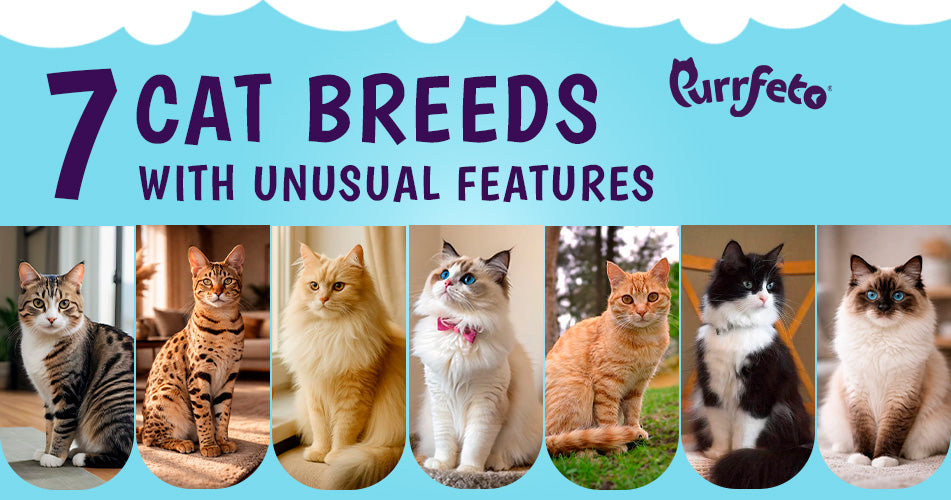
Felines are some of the most fascinating domestic animals in the world. From playful lap cats to highly distinctive rare breeds, cats come in a wide variety of appearances and personalities.
Nature has evolved these ruthless killers in multiple shapes and sizes to fill different niches. Many cat species live in the wild and have become apex predators in their domains, such as lions, tigers, and more. Over the years, humans have domesticated these animals, drawn to their charming and lovable nature. In this blog post, we explore 7 unusual cat breeds with rare and exotic features, along with their personality traits and care needs.
What makes a cat breed unusual?
It’s not just about the weird skin texture or the face shape that defines an unusual cat breed. Rare genetics, distinct physical traits, and scarce populations define unusual cat breeds.
Unique Genetics & Traits
If you are a F.R.I.E.N.D.S. fan, you probably remember how Rachel gets a Sphynx cat. If you've ever seen a Sphynx cat breed, you know it has no fur. Similarly, the Scottish Fold has tiny folded ears. These features are a result of natural genetic mutations that define the identity of these entire aesthetic breeds.
Some well-known distinctive traits in exotic cat breeds that give them a visually unique appearance are the following:
- Hairless (Sphynx)
- Curly fur (Devon Rex, Cornish Rex)
- Folded ears (Scottish Fold)
Rarity & Limited Breeding
Certain breeds are extremely rare and cannot be found in random shelter homes due to the following:
- Limited breeding programs
- Strict genetic control
- Low global population
Because of this rarity, exotic cat breeds are often expensive and difficult to find in shelters or adoption centres.
7 Unusual cat breeds with unique features
1. Sphynx – The hairless wonder
The Sphynx cat looks like an ancient Egyptian god. These exotic animals are quite popular among pet enthusiasts.
The Look:
- Completely hairless body
- Visible skin folds and large ears
The Personality:
- Extremely affectionate
- Loves human contact and warmth
These cats are extremely clingy and will want to cuddle with you for warmth. These cats are extremely friendly by nature and often behave in a clingy way (always sticking to humans).
Sphynx requires regular baths to remove skin oils and for cleansing.
Diet: The Sphynx cat requires a diet that is rich in lean protein, healthy fats and essential nutrients. Formulas with meat like chicken and salmon, or tuna are excellent for maintaining healthy skin and energy in this breed.
2. Lykoi – The folklore cats
These cats look like they will transform at the sight of a full moon. The Lykoi is often called the “werewolf cat” due to its wild appearance. If you are someone who dreams of having a mystical, magical pet from some folklore, this is the breed to look out for. This is a relatively new breed that is rare and looked out for.
The Look:
- Patchy fur with a masked face gives them a wolf-like appearance
- Wild, wolf-like appearance
The Personality:
- Playful and intelligent
- Curious and alert
Despite the look, their behaviour is that of an absolute sweetheart.
Diet: The Lyoki breed also requires a high-protein diet with nutrients coming from poultry and essential foreat. Wet cat food like Mackerel in gravy is preferable for its high moisture. Omega-3, Omega -6 and Zinc are essential for this breed.
3. Devon Rex – The Curly-Coated Cat
With its soft curly fur, giant ears, and mischievous eyes, the Devon Rex is a woodland sprite.
The Look:
- Curly, soft coat
- Large ears and a slim body
The Personality:
- Highly energetic & curious creatures with a tendency to socialise.
- Loves attention and interaction
They will definitely look for ways to open your cabinets when you aren’t playing with them.
Diet: As these cats are active in nature and have high energy levels, they require lean meat from animal sources to stay fit. Taurine & Omega-3 are essential for their heart and skin health. These cats require moderate fat levels for their highly active nature.
4. Scottish Fold - The Owl Cat
The Scottish Fold is made popular by social media and is probably the king of the “perpetually confused look”. You might have seen these grey fluffy cats trending all over social media for their looks.
The Look:
- Distinct folded ears
- Round face with owl-like appearance
The Personality:
- Calm and adaptable nature
- Loves sitting in funny “Buddha poses”
Diet: These cats require a lot of salmon oil (Omega-3) to manage genetic cartilage issues. Look for low-card and grain-free formulas. Calcium, taurine and iron are required for this breed.
5. Khao Manee – The Diamond-Eyed Cat
The breed hails from Thailand and has historically been a favourite pet of the royals. Khao Manee is a short, white-haired cat.
The Look:
- Pure white coat
- Blue or odd-colored eyes (one blue, one green)
The Personality:
- Social beings and incredibly affectionate
- Loves companionship
Diet: A high-protein diet rich in taurine and fatty acids for their muscular build is necessary. A mixture of wet and dry foods with strict portion control is often prescribed for these active, indoor cats.
6. American Bobtail – The Golden Retriever of Cats
The American Bobtail looks like a wild lynx but acts like a loyal puppy.
The Look:
- A naturally short, stubby tail about one-third the length of a normal tail.
- Strong and muscular body
The Personality:
- Intelligent and loyal
- Enjoys travel and leash walking
Diet: To maintain their athleticism, these cats need a combination of dry kibble and wet food. This helps prevent dehydration and supports overall health. A high-protein and nutrient-dense diet helps maintain muscle mass. Including tuna-based wet food in jelly can help boost hydration while providing essential nutrients for an active lifestyle.
7. Cornish Rex – The Velvet Coat
While the Devon Rex has curls, the Cornish Rex has "marcel waves".
The Look:
- An incredibly soft, wavy coat that feels like crushed velvet.
- They have a curved "arch" to their back, like a greyhound.
The Personality:
- Extremely athletic and lightweight.
- Olympic sprinters: Love jumping and running.
Diet: A low-carb, high-protein diet with a balance of wet and dry food is required for these cats. These cats are extremely active and require food that gives them energy.
Caring for the Rare and Exotic Cat Breeds
Owning an exotic breed isn't all Instagram photos and bragging rights. These cats often require specialised care to stay healthy and happy:
- Importance of Proper Nutrition: Many of these breeds (especially the hairless ones like the Sphynx) have incredibly high metabolisms and need nutrient-rich, high-protein diets to maintain body temperature, energy levels, and overall health; many pet parents prefer balanced options like Purrfeto cat food to support these needs.
- Activity & Mental Stimulation: Intelligence usually comes standard with these breeds. If you don't give them puzzles and toys, they will find their own "fun" (usually at the expense of your curtains or designer rugs).
- Special Grooming: Exotic cat breeds often require breed-specific care routines, such as skin cleaning for hairless cats or regular grooming for curly-coated breeds, making consistent care a key responsibility for pet parents.
- Strong Bonding & Personality Traits: Despite their unusual looks, these cats form strong emotional bonds with their owners and are known for their affectionate, loyal, and highly social personalities.
- Unusual Cats Make Special Companions: Beyond the strange ears and weird fur, these cats are conversation starters. They challenge our ideas of beauty and remind us that being "different" is exactly what makes you unforgettable.
FAQs
1. Are hairless cats hypoallergenic?
Not necessarily! Most people are allergic to a protein in cat saliva (Fel d 1), not the fur itself. Since hairless cats still lick themselves, they can still trigger allergies.
2. Are these breeds more expensive?
Generally, yes. Because they are rare and require specific breeding standards, expect to pay a premium.
3. Do unusual breeds have more health issues?
Some do. For example, the gene that folds a Scottish Fold's ears can also affect its joints. Always do your research and find a reputable breeder!
4. Are unusual cat breeds suitable for first-time pet owners?
Not always. Some unusual or exotic cat breeds require specialised care, higher maintenance, and more attention. First-time owners should research the breed’s needs carefully before choosing one.
5. Do rare cat breeds require more maintenance than regular cats?
In many cases, yes. Breeds like hairless or curly-coated cats may need extra grooming, skin care, or dietary attention compared to regular domestic cats.
 Back to Blogs


